
How Funerals Have Changed Over the Last 100 years
How Funerals Have Changed
Over the Last 100 years
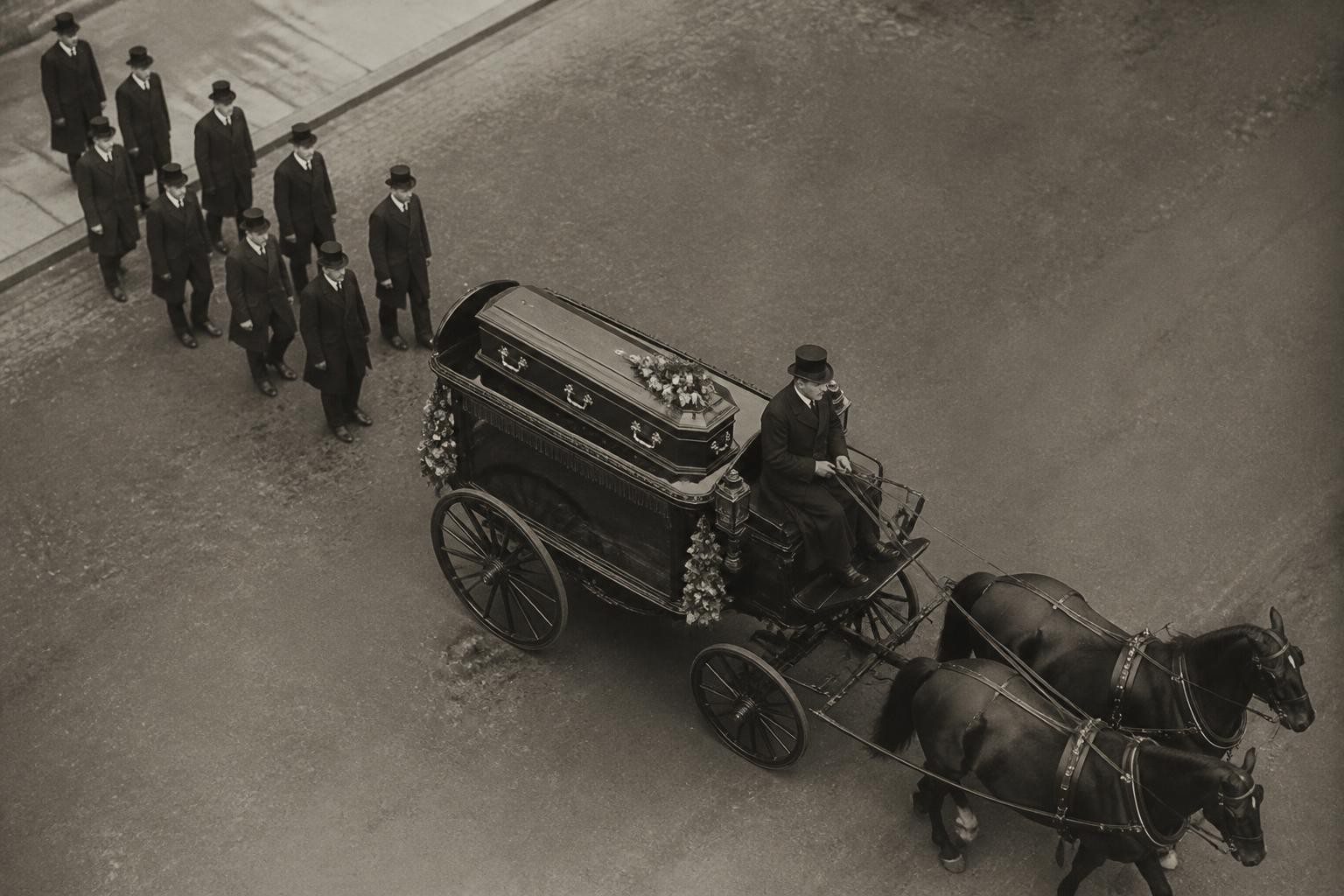
If you are asking how funerals have changed in the UK over the last 100 years, the short answer is that they have moved from being largely home-based, religious and community-led to being more flexible, professionalised and personal. Families today usually have more choice over the type of service, the setting, the music, the transport, the final resting place and the budget.
That does not mean funerals have lost their meaning. In many ways, the opposite is true. Modern funerals can still be traditional and formal, but they can also reflect the person who has died far more closely than was once possible. At Mears Family Funerals, we see families balance faith, family custom, cost and personal wishes every day, and that balance is one of the biggest changes of all.
What did a funeral in Britain look like 100 years ago?
A funeral in Britain in the 1920s would have looked familiar in some ways, but very different in others. Death was more visible in everyday life. Many people died at home, and the person who had died would often remain in the house until the funeral. Family members, neighbours and local women in the community frequently played a direct role in washing, dressing and sitting with the deceased.
Funerals were also more strongly shaped by religion. Anglican, Catholic, Nonconformist and Jewish customs were often followed closely, depending on the family and the local area. Church attendance was higher, and clergy usually had a central role in the service. The funeral itself was commonly formal, restrained and guided by established expectations about mourning dress, behaviour and procession.
Community involvement was much stronger than it is now. Extended families often lived close together, neighbours knew one another well, and local employers, churches and societies might all be involved. In some places, it was not unusual for large numbers of people to join the cortege on foot. Mourning customs could continue for months, especially for widows, who might wear black for a long period.
Burial was more common than cremation. Cemetery and churchyard funerals were the norm, and the grave often became a lasting focal point for remembrance. The funeral director’s role existed, but it was generally narrower than it is today. Many practical tasks that are now handled by funeral professionals were once shared between families, clergy and the local community.
Why did funeral traditions begin to change?
The biggest changes came from wider social change. Over the last century, Britain changed in how people lived, worked, travelled and practised religion. Those shifts affected funerals as much as any other part of life.
One important change was healthcare. As more people died in hospitals, hospices and care settings rather than at home, the immediate care of the person who had died moved away from the family home. The creation of the NHS changed the wider pattern of end-of-life care, and over time families became less likely to manage the early practical stages themselves.
Housing also made a difference. Smaller homes, more flats and less space for large family gatherings made it less practical to keep someone at home before the funeral. At the same time, families became more geographically spread out. Children and grandchildren might live in different towns or even overseas, which changed both the timing and organisation of funerals.
Transport transformed expectations too. In earlier decades, funerals were often local because life was local. As car ownership increased and travel became easier, mourners could come from further away. That opened up more options for venue and timing, but it also meant funerals had to fit around modern work and family commitments.
Secularisation played a major part. Many families still want a religious funeral, and faith remains central for a great number of people, but fewer families now feel bound to one set form. Civil celebrants, humanist services and mixed ceremonies have become much more common. Instead of following one expected pattern, families often choose which elements matter most to them.
Family life has changed as well. Blended families, unmarried partners, same-sex spouses, close friends and chosen family may all have an important place in arranging and attending a funeral. Modern funerals often reflect those relationships more openly than they might have done in the past.
How did cremation become so common?
Cremation became more common gradually, then became the main choice for many families. In the early 20th century it was still unusual, and in some communities it was viewed with hesitation, often for religious or cultural reasons. Over time, attitudes changed.
Part of that change was practical. Cremation can offer more flexibility around cemetery space, memorial choices and future arrangements. It also changed the shape of the ceremony itself. Instead of a burial at a grave immediately after the service, families could hold a service at a crematorium chapel and then decide later what to do with the ashes.
That shift had a lasting effect on timing and decision-making. Families no longer had to settle every memorial question at once. Ashes could be scattered, buried, kept, divided between family members where appropriate, or placed in Cremation Urns. Some families choose Cremation Caskets, while others prefer something more contemporary, such as Ashes into Glass or Fingerprint Jewellery as a keepsake.
Cremation also created room for different styles of funeral. Some families want a full service with music, readings and mourners present. Others prefer a simpler arrangement. Today, Direct Cremation is a recognised option for people who do not want a formal service at the crematorium, or who wish to hold a separate memorial later. For some families this is about cost, for others it is about personality, privacy or simplicity. We have written more about simple cremation options and what they include.
How have funerals become more personal?
One of the clearest answers to the question of how funerals have changed in the UK over the last 100 years is that services have become far more personal. A century ago, the structure was usually fixed by religion, local custom and social expectation. Today, families often begin with the person, then build the funeral around their life, values and character.
That can be seen in almost every part of the day. Music may range from hymns and organ pieces to favourite songs. Readings might be biblical, literary or written by family members. Dress codes can still be black and formal, but many families now ask mourners to wear colour, sports shirts, uniforms or something that reflects the person who has died.
Printed materials have changed too. An Order of Service is still important for many families, especially in churches and crematoria, but it can now include family photographs, favourite poems, personal tributes and bespoke design. The tone can be formal, gentle, celebratory or quietly modern.
Vehicles are another example. A traditional hearse and limousines remain the right choice for many, but they are no longer the only option. Some families choose a Traditional Horse Drawn Funeral. Others keep things simple and private. The language around funerals has shifted as well, with terms such as Bespoke Funerals and Basic Funeral reflecting the wider range of choices now available.
Personalisation does not mean informality unless that is what the family wants. A funeral can be highly personal and still deeply dignified. In our experience, the most meaningful services are often the ones that feel true to the person, whether that means a full church funeral, a crematorium service, a woodland committal or a simple Direct Cremation followed by a gathering at home.
What has changed in the practical side of arranging a funeral?
The practical side of arranging a funeral is now much more structured and professionally supported than it was 100 years ago. Families still make the important decisions, but funeral directors now guide them through a process that includes legal paperwork, transport, care, scheduling and clear costs.
Today, arranging a funeral usually involves documents such as the Medical Certificate of Cause of Death, registration of the death, and the forms needed for burial or cremation. In England and Wales, cremation requires specific statutory forms and approvals that differ from the broader idea people sometimes have of European practice. Where there are delays, for example because of a coroner’s involvement, timings can change and families often need help understanding what happens next.
Care of the person who has died has changed too. Instead of remaining at home in most cases, they are usually brought into professional care, often to a Chapel of Rest or one of our Care Centres, where visits can be arranged where appropriate. Standards of care, presentation and identification are now an important part of what families expect from a funeral director.
Transparency around pricing matters much more than it once did. Families rightly want to understand what is included, what is a third party cost, and where they have choices. Planning ahead has become more common for the same reason. People want to record wishes, control costs where possible and reduce pressure on relatives. We also see more families needing support beyond the funeral itself, whether that means Memorials, Wills & Probate guidance, or practical help after the service.
Modern funeral directors may also manage specialist arrangements that were once far less common. Repatriation is one example. When someone dies abroad, or needs to be returned overseas, the process can involve consular paperwork, airline procedures, translation of documents and local authority requirements. As a UK repatriation specialist, we handle these arrangements in detail, including options such as Aura Flights and Carbon Offsetting where families want to discuss them.
Memorial choices have widened as well. Families may choose a headstone, a tablet, cremated remains memorialisation or something more individual. Our guide to choosing a lasting memorial for someone you love explains some of those options. For those planning ahead or comparing arrangements, clear tools also matter, including a Funeral Price Estimator and practical information such as Funeral Etiquette Guides.
What do these changes mean for families today?
For families today, these changes mean more choice, but also more decisions. That can feel like freedom, and it can also feel overwhelming when someone has just died. The important point is that there is no single right way to hold a funeral in modern Britain.
Some families want the familiar structure of a church service, burial and formal mourning. Others want a crematorium service with contemporary music and personal tributes. Some choose a Basic Funeral because simplicity feels right. Others arrange Bespoke Funerals with carefully chosen details, flowers, vehicles and keepsakes. Families may also choose environmentally minded options, including natural materials such as coffins made by Somerset Willow.
What matters most is that the funeral fits the person, the family’s beliefs and the practical realities they are facing. Budget matters. Timing matters. Faith matters. Family dynamics matter. None of those considerations take away from dignity. A simple funeral can be every bit as respectful as a larger one.
At Mears Family Funerals, we believe the biggest change over the last century is not that tradition has disappeared, but that families are now allowed more room within it. We can still help with the formalities, the ceremonial details and the quiet moments of care that have always mattered. We simply do so in a way that reflects modern life. If you are comparing options, our article on traditional cremation services and what families should expect may also be useful.
Whether a family wants something traditional, simple or highly personal, the purpose remains the same as it was 100 years ago, to mark a life, support the people left behind and begin saying goodbye with care.
Questions and answers
Were funerals always held in churches?
No. Church funerals were once far more common, but not universal. Today, many families still choose churches, while others prefer crematoria, cemeteries, chapels or other meaningful venues.
Why is cremation more common now than burial?
Cremation became more common because it is often more flexible, can cost less than burial, and suits changing beliefs, space pressures and modern family preferences.
Are modern funerals less formal than they used to be?
Often yes, but not always. Some families want a traditional service, while others choose a simpler or more personal approach. Formality now depends more on the family’s wishes than on social expectation.
Has the role of the funeral director changed?
Yes. Funeral directors now guide families through more administration, transport, care arrangements, venue choices and personal options, while still providing practical and emotional support.
Do families still choose traditional funerals?
Yes. Many families still value traditional elements such as a hearse, formal dress, hymns, burial, a Chapel of Rest visit or a religious service, even when adding personal touches.