
Where Day of the Dead Began and How it Changed
Where Day of the Dead Began
and How it has Changed
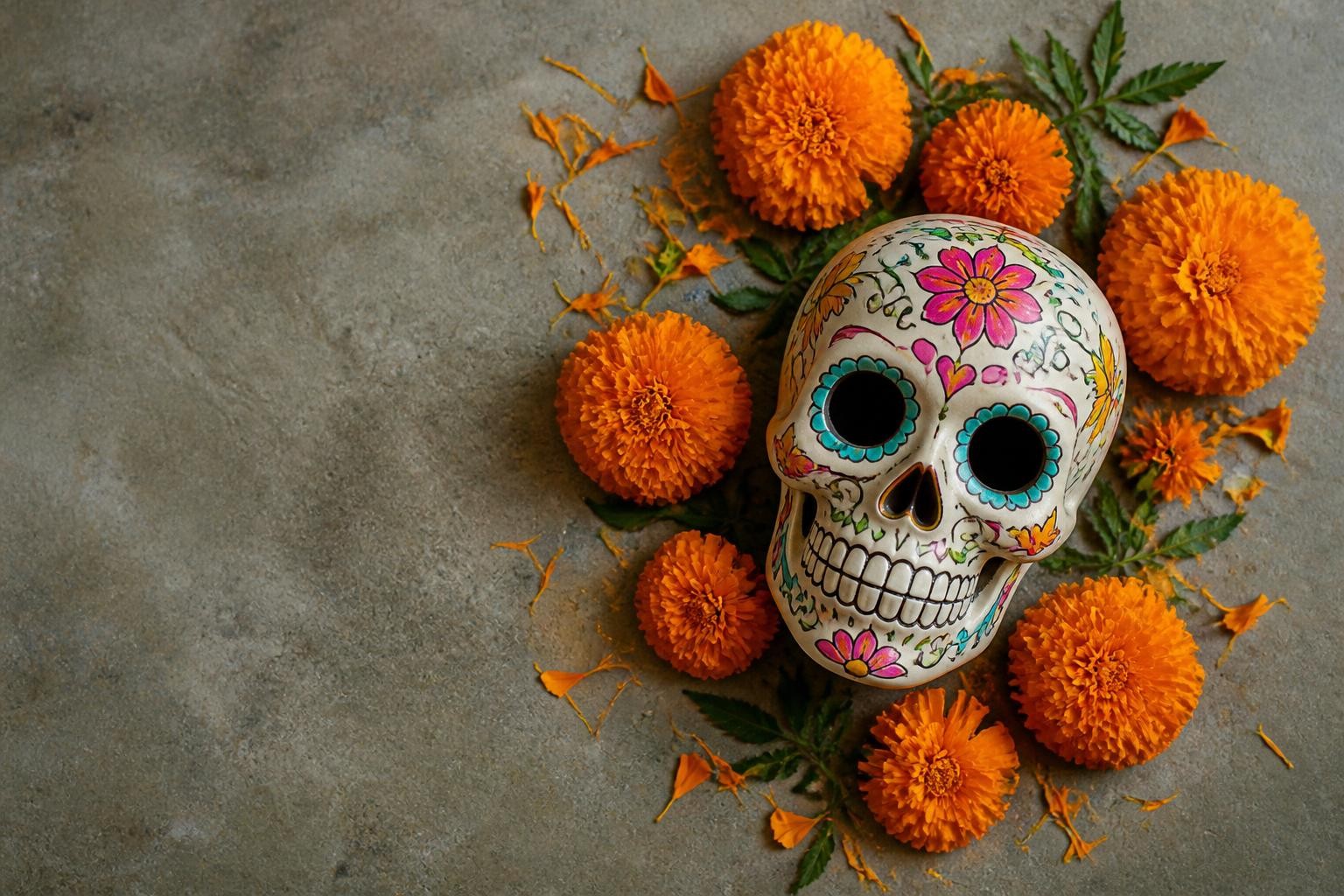
If you are wondering where Day of the Dead began, its roots lie in Indigenous remembrance traditions in what is now Mexico. Over time, those older customs met Spanish Catholic observances and gradually formed the festival many people recognise today as Día de los Muertos.
For families who are grieving, this matters because Day of the Dead is not centred on fear or sorrow alone. It is a way of keeping a bond with those who have died, through memory, ritual, food, flowers and time spent together. That idea of continuing connection is something we understand well at Mears Family Funerals, whether a family is arranging a funeral, planning Memorials, or looking for personal ways to honour someone’s life.
What is Day of the Dead?
Day of the Dead is a remembrance tradition in which families welcome, honour and remember loved ones who have died. It is most closely associated with Mexico, although it is now observed in many other places too, especially where Mexican communities have settled.
At its heart, it is a family occasion. People create home altars, visit graves, bring flowers, light candles, prepare favourite foods and spend time speaking about those who have died. The tone is often warm, colourful and intimate. It can include sadness, but it is not intended to be a gloomy event. The purpose is remembrance, presence and love.
The dates most commonly linked with Day of the Dead are 1 and 2 November. In many communities, 1 November is associated with children who have died, sometimes called Día de los Angelitos, and 2 November with adults. Customs vary by region, family and local tradition, which is important to remember. There is no single way to observe it.
For many people in the UK, the visual symbols are the first things they notice, marigolds, candles, painted skulls and decorated altars. But those symbols only make sense when we understand the deeper meaning. Day of the Dead is about remembering the dead as part of family life, not as people forgotten or left behind.
Where did Day of the Dead originate?
To answer the question properly, we need to look to Indigenous cultures of Mesoamerica, especially in what is now central and southern Mexico. Long before Spanish colonisation, many Indigenous peoples held ceremonies connected with death, ancestry and the cyclical nature of life.
Among the cultures often discussed in relation to the origins of Day of the Dead are the Mexica, often called the Aztecs, as well as Maya, Purepecha, Totonac and Nahua communities. Their beliefs were not identical, and it would be too simple to treat them as one tradition. Even so, many shared an understanding that death was part of a larger spiritual order, not simply an ending.
In pre-Hispanic belief systems, the afterlife was often understood in ways that differed from later Christian ideas of heaven and hell. The destination of the dead could depend on the manner of death rather than moral judgement alone. Ceremonies for the dead formed part of a continuing relationship between the living, the ancestors and the spiritual world.
Some early observances took place at other times of year, often linked to agricultural cycles, seasonal change and ritual calendars. Offerings, food, flowers and objects connected with the dead were already meaningful long before the arrival of the Spanish. That is why, when people ask where Day of the Dead originated, the most accurate answer is that it grew from Indigenous Mexican traditions of honouring the dead, rather than appearing suddenly as a single new festival.
It is also worth saying that the modern festival is not a museum piece. Indigenous communities are not just part of its distant past. Many remain active bearers of the tradition, preserving local practices while adapting them over generations.
How did Spanish and Catholic influences shape it?
After the Spanish conquest in the 16th century, Indigenous customs did not simply disappear. Instead, many merged with Catholic feast days introduced by the colonisers, especially All Saints’ Day on 1 November and All Souls’ Day on 2 November.
This process of blending is often described as syncretism, meaning that different religious and cultural traditions combined into something new. In practical terms, remembrance rituals that may once have taken place in other months became associated with the early November Christian calendar. Catholic prayers, saints’ imagery, crosses and church observances were added alongside older Indigenous practices.
That is one reason Day of the Dead can look both deeply Catholic and deeply pre-Hispanic at the same time. A family altar may include a crucifix, images of the Virgin Mary and candles for prayer, while also using marigold petals, favourite foods, water and personal possessions to guide and welcome the dead.
Spanish influence also changed the material culture around the festival. Wheat flour breads developed under colonial rule, contributing to the forms of pan de muerto that many people now associate with the occasion. Sugar, introduced and expanded through colonial systems, helped shape the use of sugar skulls. Cemeteries themselves became important public places of observance in ways that reflected both Catholic burial customs and older communal remembrance.
So if we ask where Day of the Dead originated, the answer has two layers. Its deepest roots are Indigenous. Its present form was shaped significantly by Spanish colonisation and Catholic observance. Both histories matter, but they are not equal in origin. The foundation came first from Indigenous remembrance traditions in Mexico.
Why are altars, marigolds and food so important?
Altars, often called ofrendas, are central because they create a space of welcome for the dead. They are not usually altars in the sense of formal worship. Instead, they are carefully arranged displays through which families remember, invite and honour those who have died.
A typical ofrenda may include photographs, candles, flowers, water, salt, food, incense and objects that belonged to the person being remembered. Some families add religious images. Others focus on personal items such as clothing, books, musical instruments or favourite drinks. The point is recognition. The altar says, in effect, you are still part of this family, and we remember who you are.
Marigolds are especially important because of their colour, scent and symbolic role. In Mexico, cempasúchil, often known as the marigold of the dead, is believed to help guide spirits back to the world of the living. Petals may be scattered in paths from the doorway to the altar or from the grave to the home. Their brightness also reflects life, warmth and the returning presence of loved ones.
Food matters because memory is physical as well as emotional. Preparing a favourite dish can be one of the strongest ways to recall a person. Pan de muerto, fruit, mole, tamales, sweets and drinks may all be placed on the altar, depending on region and family custom. The offering is less about display than about hospitality.
This is one reason Day of the Dead resonates with many bereaved families beyond Mexico. Across cultures, people often remember through objects, flowers, taste and ritual acts. We see something similar when families choose meaningful floral tributes, create a personal Order of Service, or look for lasting keepsakes such as ways to turn ashes into jewellery. The forms differ, but the human need is familiar.
How is Day of the Dead observed today?
Today, Day of the Dead is observed in many ways, from quiet family gatherings at home to large public events. In Mexico, families may clean and decorate graves, hold vigils in cemeteries, build ofrendas, cook traditional foods and gather over several days to remember those who have died.
Regional customs remain important. In some places, observances are deeply local and community based. In others, there are processions, music, public art and school activities. Michoacán, Oaxaca, Mexico City and Yucatán all have distinctive traditions, and the same is true in smaller towns and villages. There is no single national script.
Outside Mexico, the festival has spread widely, especially in the United States and increasingly in parts of Europe, including the UK. Sometimes it is observed within Mexican families and communities in a traditional way. Sometimes it appears in museums, schools, churches and cultural programmes. That wider visibility can be valuable when it helps people understand the meaning of remembrance. It becomes less helpful when the imagery is separated from the people and beliefs that gave it life.
For bereaved families here in Britain, Day of the Dead can also prompt reflection on how we remember our own dead. Some families prefer a church service, others a secular gathering, and others something highly personal after the funeral itself. We help families create those spaces for remembrance in many forms, whether through Memorials, keepsakes such as Fingerprint Jewellery, or practical support when a death has happened abroad and bringing ashes home to the UK is part of the process.
At Mears Family Funerals, and across The Steven Mears Group, we know that remembrance does not end on the day of a funeral. For some families it continues through anniversaries, graveside visits, flowers, shared meals, stories, or personal tributes kept at home. Day of the Dead is one expression of that enduring connection. Its history begins in Indigenous Mexico, its form was shaped by centuries of cultural change, and its lasting message is simple, we keep our loved ones close by remembering them.
Questions and answers
Is Day of the Dead the same as Halloween?
No. Although the dates are close, Day of the Dead is a remembrance tradition centred on honouring loved ones who have died, while Halloween is generally more focused on costumes, folklore and entertainment.
Did Day of the Dead start in Mexico?
Yes. Its roots are in Indigenous traditions from the region that is now Mexico, later shaped by Catholic observances introduced during Spanish colonisation.
Why is Day of the Dead celebrated on 1 and 2 November?
The modern dates reflect the Catholic calendar, especially All Saints’ Day and All Souls’ Day, which became linked with older Indigenous remembrance customs.
What does an ofrenda mean?
An ofrenda is a home altar created to remember and welcome the dead. It often includes photographs, candles, flowers, favourite foods and personal items.
Is Day of the Dead a sad occasion?
It can be emotional, but it is not only about sorrow. Many families see it as a warm, loving time to remember, honour and feel close to those who have died.