
Can Ashes be Turned into Jewellery?
Can Ashes be Turned into Jewellery?
16th October 2026 by Mears Family Funerals
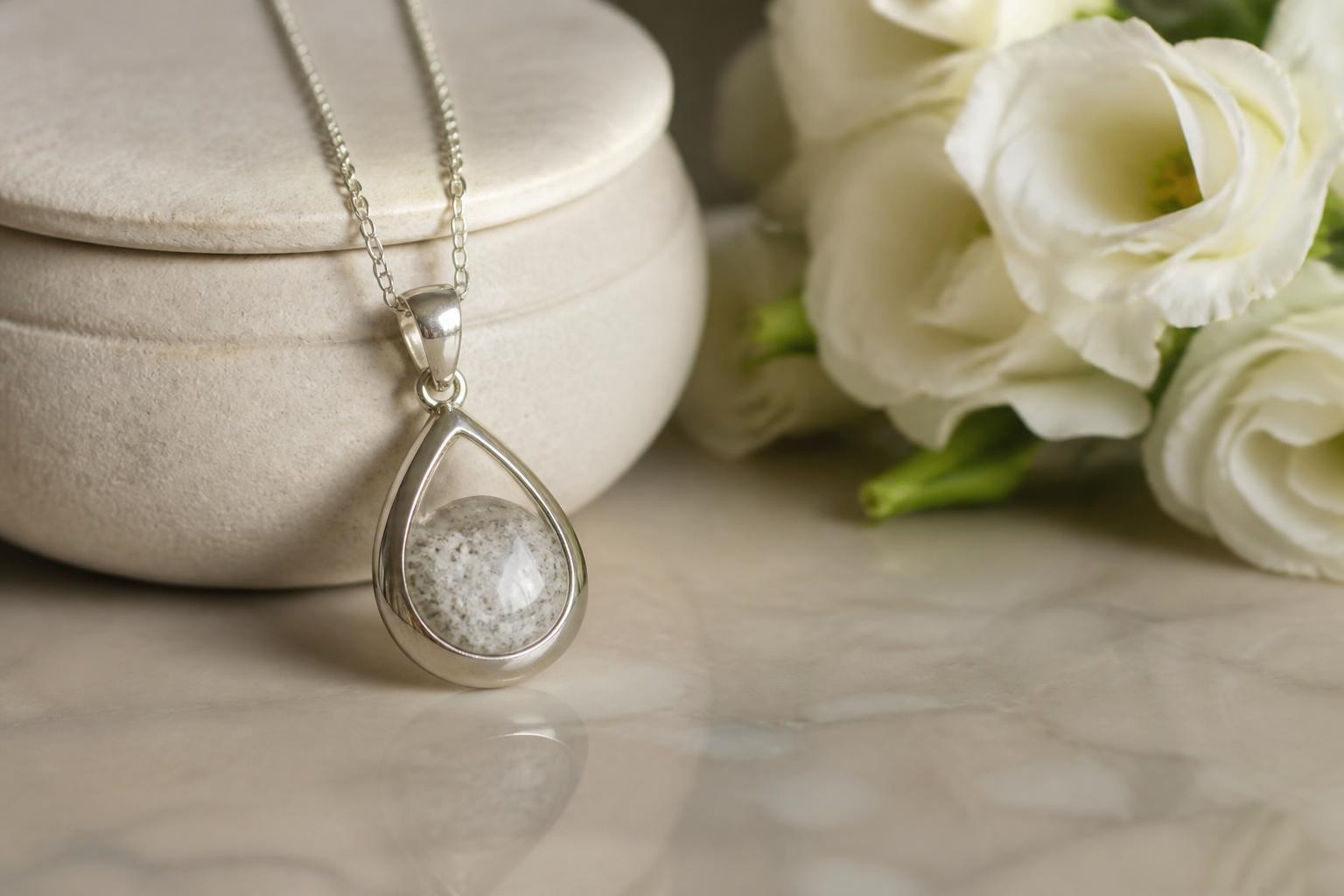
Yes, ashes can be turned into jewellery in the UK. Many families choose this as a personal way to keep a loved one close, whether that is through a pendant, ring, bead, bracelet charm or a piece made using glass or a fingerprint.
If you have been searching for whether ashes can be made into jewellery in the UK, the short answer is yes, and the process is usually straightforward. Only a very small amount of cremated remains is normally needed, and the rest can stay in a chosen urn, be buried, scattered, or shared between relatives in the usual way.
What it means to have ashes made into jewellery
Memorial jewellery made with ashes is jewellery that contains, incorporates, or is created using a small portion of cremated remains. In the UK, this usually falls into a few different methods.
One common option is a keepsake piece with a small internal chamber. A tiny amount of ashes is placed inside the jewellery and sealed. Another is resin memorial jewellery, where ashes are mixed into a setting and made visible as part of the design. A third is Ashes into Glass, where a small amount of ashes is fused into decorative glass to create a bead, pendant or similar item.
Some families also choose Fingerprint Jewellery instead of, or as well as, ashes jewellery. This uses the fingerprint of the person who has died, taken either before the funeral or from existing records where available, and turns it into an engraved or moulded design. It does not contain ashes, but it serves a similar memorial purpose.
The amount of ashes required is usually very small. In most cases, it is a pinch rather than anything close to a full container. That often reassures families who want to keep the majority of the ashes in Cremation Urns, divide them between close relatives, or use some later for Memorials. If there are unused ashes after the piece is completed, many makers will return them to you, and it is sensible to confirm that before placing an order.
What types of memorial jewellery are available?
Families in the UK will usually come across several main styles.
Pendants are one of the most popular choices. These can be simple lockets, modern ash-holding capsules, heart shapes, crosses, circles, teardrops or more bespoke forms. Some are designed so the ashes are hidden within the piece. Others make the ashes visible in resin or glass.
Rings are often chosen for everyday wear. These may include a discreet chamber, a resin inlay, or a stone-like setting made with ash and coloured resin. Rings can feel especially personal, but they also need careful sizing from the start, as resizing may not always be possible depending on the design.
Bracelets and charms are another common option. A bracelet can hold one or more memorial beads, which allows families to add to it over time. This can be a good choice where several pieces are being made for different relatives.
Beads are frequently selected for compatibility with existing charm bracelets. If that matters to you, check the fitting and thread size before ordering.
Ashes into Glass pieces are distinct because the ashes are incorporated into molten glass during production. The finished result often has a soft, luminous appearance, and every piece is slightly different. Some families prefer this because it feels artistic and unique rather than overtly funerary.
Fingerprint Jewellery is different again. Instead of using ashes, it uses the unique fingerprint pattern of the person who has died. This can be engraved onto silver, gold or stainless steel, or cast into the metal itself. It is a good option where ashes are not available, where a cremation has not taken place, or where the family would prefer not to separate any ashes.
Materials also vary. Sterling silver is common and more affordable than gold. Gold, white gold and rose gold are available for some ranges. Stainless steel is sometimes offered for durability, although it may be less traditional in appearance. If the piece will be worn every day, ask how the material will age and whether the finish is likely to scratch, tarnish or need periodic polishing.
Who can give permission to use ashes?
This is one of the most important practical questions. In the UK, there is no single universal rule that answers every family situation once cremated remains have been released, but the starting point is usually the person who has lawful possession of the ashes after cremation.
That may be the applicant for cremation, the executor named in the will, or the nearest relative handling arrangements, depending on how the funeral was organised and who collected the ashes from the crematorium or funeral director. Crematoria will normally release ashes only to the authorised applicant or to someone they have nominated.
Once ashes have been collected, it is wise to treat decisions about memorial use as a family matter rather than just a technical one. If ashes are going to be divided, or if one relative wants jewellery made and another objects, the safest course is to reach agreement before any portion is sent away. Disputes over ashes can become deeply upsetting, especially where no clear wishes were left by the person who died.
Our advice is simple. If more than one close family member is involved, discuss it openly and record what has been agreed. That can be as straightforward as a written message confirming that everyone is content for a small amount to be used. If one person is holding the ashes on behalf of the family, they should not assume they can make the decision alone where others have an equal emotional interest.
The legal position can also differ in complexity between England and Wales, Scotland and Northern Ireland, particularly around who has authority after death and how remains are dealt with. In practice, however, memorial jewellery providers generally rely on the person sending the ashes to confirm they have the right to do so.
If there is disagreement, it is better to pause than rush. We can help families think through these decisions alongside wider funeral arrangements, whether that is a Bespoke Funerals service, a Basic Funeral, or a Direct Cremation, and we can also guide you on related practical matters such as funeral arrangements over the phone where families are coordinating decisions from different locations.
How the process usually works
The process usually begins after the cremation has taken place and the ashes have been collected from the crematorium or from us. Some families keep the ashes temporarily in one of our Cremation Caskets, while others move them into Cremation Urns before deciding on jewellery or other Memorials.
The first step is choosing the type of piece. That means deciding whether you want a pendant, ring, bracelet, bead, Ashes into Glass design, or Fingerprint Jewellery. At this stage, it is worth thinking about who will wear it, whether it is for daily use, and whether more than one family member would like a matching or coordinated piece.
Next, the maker will usually send instructions and, in many cases, a kit or secure container for the ashes. Follow those instructions carefully. Only send the amount requested. Sending more than necessary does not improve the finished result and can create avoidable worry.
For postage within the UK, use the method the provider specifies. Ashes should be clearly labelled in the way requested by the jeweller, securely packaged, and sent through an appropriate tracked service if they are being posted. Some families prefer hand delivery where that is available.
Once received, the ashes are logged by the maker and matched to your order. Production time varies depending on the method. A simple ash-holding item may be quicker than a handmade glass or resin piece, and hallmarking can add time if the item requires it under UK rules. In the UK, precious metal items above the statutory weight thresholds must be hallmarked before sale, unless an exemption applies. For sterling silver that threshold is 7.78 grams, and for gold it is 1 gram. If you are ordering a heavier gold or silver item, ask whether hallmarking is included and whether it affects the lead time.
When the jewellery is complete, the provider should explain how any unused ashes are handled. Many return them with the finished piece. Others may retain only what is permanently incorporated and send back the remainder separately. Always check this in advance.
If you are arranging matters from abroad after a death in another country, or bringing a loved one home before cremation in the UK, we can support the wider process through Repatriation. That can be especially important where family members later want ashes divided for jewellery or other remembrance items. We also publish practical guidance families often find helpful, including our Funeral Etiquette Guides for common questions after a death, and information about our branches being open for local support.
What should families check before ordering?
Start with the material. Ask exactly what the piece is made from, whether it is solid sterling silver, gold, stainless steel, resin, or glass, and whether any plating is used. Plated jewellery can wear differently over time from solid precious metal.
Check durability and suitability for everyday wear. Rings and bracelets face more knocks than pendants. Resin settings can be beautiful, but they may not suit heavy daily wear in the same way as a protected ash chamber or a solid metal design. Ask whether the piece can be worn in the shower, while swimming, or during manual work. In many cases, the safest answer will be no.
Ask for clear care instructions. Silver may tarnish over time and need polishing. Glass can chip if dropped. Some memorial pieces should be kept away from perfumes, cleaning products, heat and prolonged sunlight.
Lead time matters too. Handmade memorial jewellery is rarely an instant purchase. Production can take several weeks, especially if the item is bespoke, hallmarked, or part of a busy seasonal order book. If you need it by a certain date, such as a birthday, anniversary or memorial service, ask before ordering rather than assuming.
Pricing should be transparent. You should know whether the quoted price includes the ashes kit, return postage, engraving, hallmarking, gift packaging and VAT. Some providers charge separately for these items.
Also check the provider’s policy on mistakes, damage and loss in transit. If ashes are being posted, families need to understand what safeguards are in place and what happens if a parcel goes missing. Reputable providers should give clear instructions and a clear process.
Finally, consider whether the style feels right for the person being remembered. Some families want something discreet that nobody else would recognise. Others want a visible memorial piece that prompts conversation. There is no correct choice, only what feels appropriate to you and your family.
At Mears Family Funerals, we know memorial decisions are rarely just about the item itself. They sit alongside funeral arrangements, family discussions, and the wish to do things properly. Whether you are planning ahead, arranging a cremation, choosing Memorials, or dealing with Wills & Probate after a death, we are here to guide you with the same one-to-one support we offer across every part of our service.
Questions and answers
How much ash is needed to make jewellery?
Usually only a small amount is needed, often a teaspoon or less depending on the design. The maker should tell you exactly how much to send before you place an order.
Is it legal to make jewellery from ashes in the UK?
Yes. In the UK, families can choose memorial jewellery made from cremation ashes. It is sensible to make sure the right family members are informed and in agreement before ashes are used.
Can ashes be split between family members?
Yes, many families divide ashes so more than one person can keep a memorial item. This can include jewellery, Cremation Urns or other Memorials.
Are ashes actually inside the jewellery?
Sometimes. In some pieces, a small amount of ash is sealed inside. In others, the ashes are fused into materials such as glass or resin as part of the design.
What if I do not want to use ashes in jewellery?
You could consider Fingerprint Jewellery instead, which creates a personal keepsake without using ashes. Some families also choose other Memorials for remembrance.