
What are we Supposed to do? What You Need to Know about a Funeral
What are We Supposed to do?
What You Need to Know about a Funeral
16th September 2026 by Mears Family Funerals
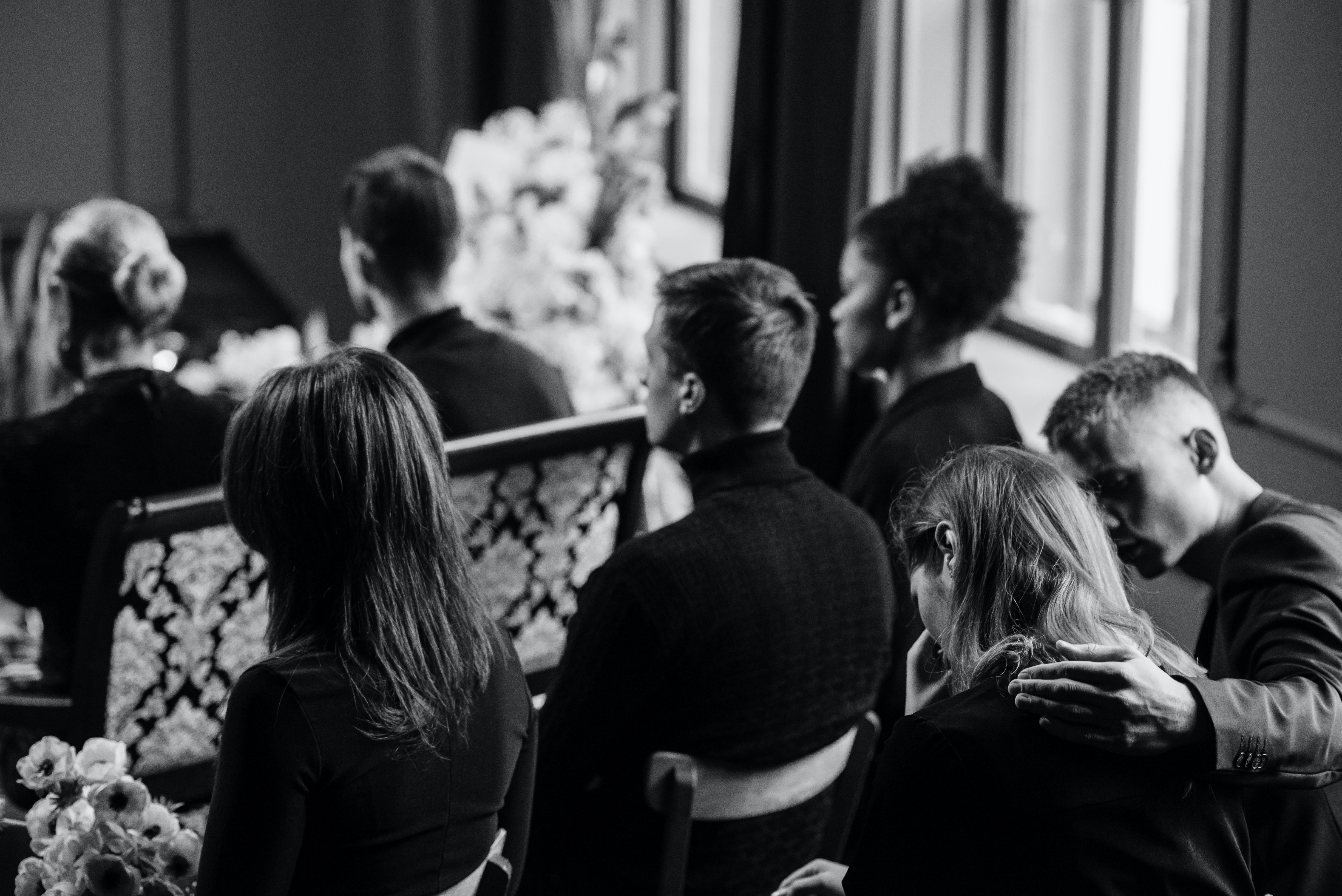
It is very common to worry about funeral etiquette for the immediate family. People often ask us, “What are we supposed to do?” The honest answer is that there is no single perfect way to do this. Customs vary by faith, by region and by family. The wishes of the person who has died, and the wishes of those closest to them, matter most.
In most funerals, the immediate family carry a gentle role rather than a formal performance. You do not need to host the day, manage every guest or remember every small detail. That is our job to help with. At Mears Family Funerals, we talk families through each step slowly, so you know what usually happens and where you can simply do what feels right.
Who counts as immediate family and what their role usually is
“Immediate family” usually means the people closest to the person who has died. Most often, that includes a husband, wife, partner, children, parents, brothers and sisters. It may also include stepchildren, grandchildren, a long term partner who was not married to them, or another relative who was their main support in life.
Families are not all shaped the same way. Sometimes the closest person is a niece, a nephew, a lifelong friend or a carer. Sometimes there has been separation, remarriage or estrangement. In practice, the immediate family are the people at the centre of the funeral arrangements and the people whose wishes carry the most weight.
Their role is usually quite simple. They make, or help make, the main decisions. They may choose burial or cremation, decide on music, readings, flowers, transport and the wording of the Order of Service. They may spend time in the Chapel of Rest if they wish. They may also decide whether the funeral is quiet and private, or larger and more public.
On the day itself, their role is to be present. That is enough.
Some families want to greet people, speak during the service or stand at the front. Others do not. Some want a Traditional Horse Drawn Funeral. Others prefer something very simple, such as a Basic Funeral or Direct Cremation followed by a separate memorial gathering. There is no rule that says the closest family must do anything public at all.
If you are arranging the funeral, you may also be handling practical matters outside the service itself. That can include registering the death, gathering paperwork, speaking to banks or beginning Wills & Probate. If there has been a death overseas, Repatriation may also be needed. These are important tasks, but they do not change the fact that you are bereaved. You are allowed to need help.
Where the closest family sit and how the day usually flows
One of the most common worries in funeral etiquette for immediate family is simply this, where do we go, and when?
Usually, the closest family arrive a little before everyone else. That gives you a quieter moment before other mourners come in. We often suggest arriving around 10 to 15 minutes early, though the exact timing depends on the venue and the type of service. If there is a cortege from home, from one of our branches or from another agreed place, we will guide you through the timing in advance.
If there is a hearse and family cars, the immediate family often travel in the first family car or cars behind the hearse. If you are meeting at the church, crematorium or cemetery instead, we will tell you exactly where to be and who will meet you.
Whether the immediate family follow the coffin in depends on the service and your preference. In many services, mourners are seated first and the coffin enters at the beginning, with the immediate family walking in behind it. In others, the coffin may already be in place before guests arrive. In some church funerals, the family may walk in together behind the coffin, while at some crematorium services the family may be seated and stand as the coffin comes in. There is no need to guess. We will explain what is planned before the day.
The closest family usually sit in the front row or first few rows. If there is a spouse or partner, they are often seated nearest the coffin, then children, parents and siblings. But seating can be arranged in the way that feels most comfortable. Divorced parents, blended families and close friends can all be seated thoughtfully. If anyone needs easy access, extra space or support, we can plan for that too.
At the end of the service, the immediate family usually leave first. Guests then follow after them. Sometimes the family stay behind for a private moment before leaving. Sometimes they walk behind the coffin as it is taken out. At a crematorium, if the committal takes place there, the family may pause before leaving their seats. At a burial, the family may travel on to the cemetery and stand close by as the coffin is lowered, or they may choose not to attend that part. Both choices are completely acceptable.
If you are unsure what to do at any point, look to us. A funeral director’s guidance on the day is part of the care. A quiet nod, a hand gesture or a few soft words are often all that is needed.
What to wear and how to handle flowers or charity donations
Families often worry about clothing far more than they need to. Black is still common, but it is not the only respectful choice. Today, most people wear something smart, simple and subdued. Dark colours such as black, navy, charcoal or deep grey are typical. A plain dress, suit, coat, shirt, blouse or jumper is usually fine.
If the person who has died asked for colour, brighter clothing, football shirts, floral prints or something less formal, that wish can absolutely be honoured. What matters is that the clothing fits the tone the family wants for the day.
For the immediate family, comfort matters too. You may be standing, walking, sitting for some time and greeting many people. Shoes should be practical. Bring a coat if there may be waiting outside. Tissues are worth having in a pocket or bag. If children are attending, it helps if they are dressed neatly but comfortably rather than stiffly.
Flowers and donations are another area where families can feel unsure. There is no obligation to ask for flowers. Some families welcome them. Others prefer donations in memory of the person who has died, often to a hospice, hospital ward, faith group or charity that meant something to them.
The wording can be very simple and kind. For flowers, families often say: “Family flowers only, please, with donations in memory of [name] to [charity].”
If flowers are welcome, you might say: “Flowers may be sent to Mears Family Funerals before the funeral, or donations in memory of [name] may be made to [charity].”
If you want donations only, you might say: “No flowers, please. Donations in memory of [name] to [charity] would be appreciated.”
There is no need to make the wording elaborate. Gentle and clear is best. We can also help you include this in the funeral notice and the Order of Service.
Some families choose flowers for the coffin and then ask guests for donations rather than more floral tributes. Others choose a very natural service with no flowers at all. Again, there is no single right answer. The choice should fit the person and the family.
What is expected at the wake or gathering afterwards
After the service, many families hold a wake or gathering. This may be at home, in a pub, a church hall, a hotel lounge or another familiar place. It can be a full reception with food, or simply tea, coffee and a chance to talk. Some families do not hold one at all.
The immediate family are not expected to entertain. That is important to say plainly.
Your role at the gathering is simply to be there in whatever way you can manage. Some families want to move around the room and speak to everyone. Others stay seated and let people come to them. Some leave after a short time because they are exhausted. All of that is normal.
Guests usually understand that the closest family may be overwhelmed, distracted or tired. Nobody sensible expects polished hosting. Quiet presence matters more than doing everything perfectly.
If you are worried about practicalities, let others help. Ask a relative, friend or venue staff member to guide guests, top up tea, point people towards the guest book or manage any food. If there are photographs, memory tables or printed cards, these can be arranged simply.
Some families like to continue gathering for support after the funeral. We often see how much comfort there is in small local moments, such as community coffee mornings where people can talk quietly or times of remembrance such as our memorial Christmas tree events.
Bringing children and helping them understand what is happening
Children can attend funerals, and many do. The question is not whether they are allowed, but whether attending is likely to help them and whether they can be supported properly on the day.
Much depends on the child’s age, their relationship with the person who has died and their own temperament. Some children want very much to be included. Others do not. Older children and teenagers often appreciate being given a real choice. Younger children need clear explanation and a trusted adult whose main job is to stay with them.
If a child is attending, it helps to explain beforehand what they will see. Use simple, honest words. You can say that people may be sad, may cry, and may also smile when they remember things. Explain what a coffin is. Explain where you are going and how long things may take. Tell them who will be with them and that they can leave for a break if they need to.
It can also help to give them a small role if they want one. They might carry a flower, place a drawing on the coffin, choose a song, read a short poem or help hand out Orders of Service. But they should never be pushed into a role for the sake of appearances.
Bring what they may need. A quiet toy, a book, water, a snack and tissues can make a real difference. If the child becomes restless or upset, taking them outside is not a failure. It is simply good care.
Some families decide that children should attend the wake but not the service. Others bring them to the service and arrange for someone to take them home afterwards. If the child does not attend at all, you can still help them say goodbye in another way, perhaps by lighting a candle, drawing a picture, visiting a grave later or choosing from Memorials at a later date.
The small kindnesses that matter in the days and weeks after
Once the funeral is over, many people feel a sudden drop. The build up has passed. Visitors may begin to fade away. This is often when the quiet practical tasks catch up with you.
There is no strict timetable for acknowledgements and thank you messages. They do not need to be done immediately. Most families deal with them in the following days or weeks, when they have a little more space.
A simple card or note is enough. You may wish to thank people for attending, for flowers, for donations, for food brought to the house, for help with transport or for personal support. The message does not need to be long. Something as simple as “Thank you for your kindness and for being with us” is often all that is needed.
If many donations were made, it can be helpful to keep a list. If someone gave special help, such as looking after children, staying overnight, speaking at the service or helping with arrangements, a more personal note can mean a great deal.
It is also fine to ask someone else to help write cards, keep track of names or organise notices. Grief is tiring. Shared practical help is one of the kindest things families can offer each other.
In the weeks after the funeral, some families begin to think about next steps. That may include choosing Memorials, arranging a later ashes interment, selecting Cremation Caskets or Cremation Urns, or considering keepsakes such as Fingerprint Jewellery or Ashes into Glass. If there has been travel involved in bringing someone home, questions may also continue around Repatriation, Aura Flights or Carbon Offsetting. These choices can wait until you are ready.
If you need to arrange things from a distance, or if speaking face to face feels too much at first, it may help to know that we can talk through funeral arrangements over the phone. If you would rather come in and sit with someone locally, our branches are open for families who want one to one support.
The most important thing to remember is this. You cannot really get this wrong. Funeral etiquette for the immediate family is not about performing grief properly. It is about making space for farewell, in the way that suits your family, your beliefs and the person you love.
At Mears Family Funerals, we guide families through Bespoke Funerals, a Basic Funeral, Direct Cremation, Memorials and every part of the practical process around them. Through our network of local High Street branches, we are here to explain what happens, answer the questions you feel unsure asking, and help you take each step at your own pace. If and when you are ready, you are welcome to call us or come in for a quiet conversation.
Frequently Asked Questions
Do immediate family have to greet everyone at the funeral?
No. Some families choose to greet people, while others need quiet and space. Both are acceptable. Your funeral director can help manage arrivals so you are not carrying too much.
Does the closest family always sit in the front row?
Usually, yes. The front rows are often kept for the closest family and close friends. If that does not feel right for your family, the seating can be arranged differently.
Is black still expected at funerals?
Not always. Dark, smart and respectful clothing is still common, but many families now choose softer colours or ask guests to wear something specific. The family’s wishes come first.
How do we ask for donations instead of flowers?
Keep it simple and kind. A notice might say, “Family flowers only, with donations in memory of [name] to [charity] if desired.” Your funeral director can help word this.
Should young children come to the funeral?
They can, if it feels right and they are prepared gently for what they will see and hear. There is no rule. Some children benefit from being included, while others may not be ready.
Do we need to send thank you cards to everyone who came?
No. Many families send thanks for cards, flowers, donations or special help, but there is no need to answer every attendance individually. A simple message is enough.