
Understanding Buddhist Funerals in the UK
Understanding Buddhist funerals in the UK
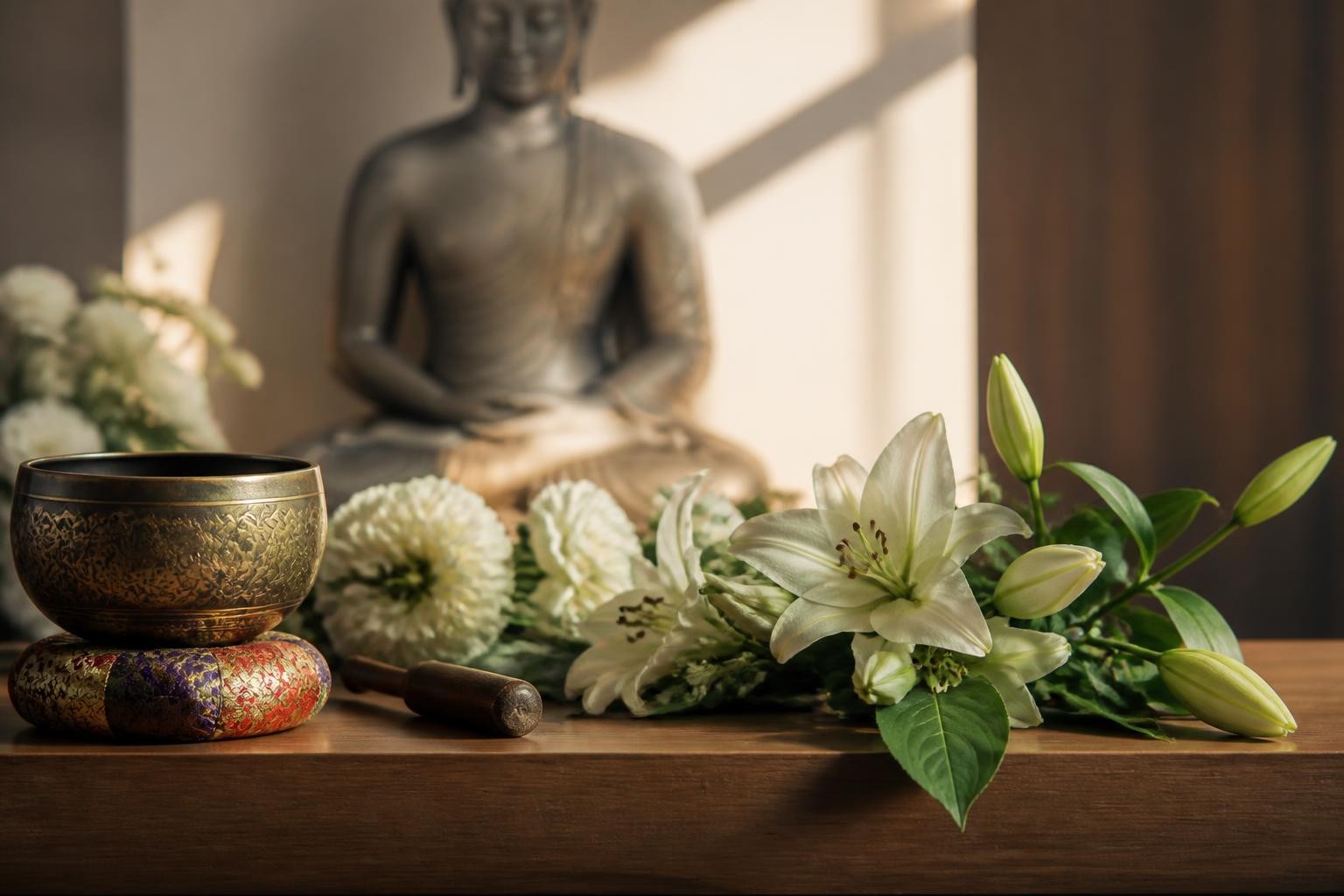
When a family asks about Buddhist funerals in the UK, the first thing we explain is that there is no single ceremony that every Buddhist follows. The core values are usually calm, dignity, compassion and reflection, but the details can vary a great deal between temples, communities and individual families.
In practice, Buddhist funeral customs in the UK often combine religious tradition with the practical steps required here, such as registering the death, arranging the funeral venue, and meeting crematorium or cemetery requirements. Our role is to make sure those practical arrangements support the family’s beliefs, rather than getting in the way of them.
What Buddhist funeral customs usually involve
Many Buddhist funerals are shaped by the belief that death is an important transition, and that the atmosphere around the person matters. Families often want the period after death, and the funeral itself, to feel peaceful and undisturbed. That usually means a simple setting, respectful handling of the person who has died, and time for prayer, chanting or silent reflection.
Simplicity is often important. That does not mean the funeral must be plain in every case, but it usually means the focus stays on the person, the teachings, and the family’s intentions rather than display. Some families choose flowers and candles, while others prefer very little decoration. Some bring a Buddha image, incense, or offerings of fruit.
Respect for the body is also a common theme. In some traditions, families may wish the body to remain still for a period after death before being moved, if circumstances allow. Some may want relatives or temple members involved in washing or dressing the person. Others prefer us to carry out those preparations quietly on their behalf, following clear instructions.
Chanting is one of the most recognisable features of a Buddhist funeral. Monks, nuns or lay leaders may chant suttas, sutras or prayers. This can be done at the home, in a temple, in our Chapel of Rest, or at the funeral service itself. Families may also include readings on impermanence, compassion and gratitude, alongside personal tributes.
Reflection matters just as much as ritual. Silence, mindful breathing and moments of contemplation are often central to the service. Even where a family is not strictly observant, they may still want the funeral to feel gentle, unrushed and spiritually respectful.
How Buddhist funerals differ between families and traditions
It is important not to assume that all Buddhist funerals will look the same. Theravada, Mahayana and Tibetan traditions each have their own customs, and many families in the UK also combine Buddhist practice with local, cultural or non-religious elements.
In Theravada communities, often linked with Sri Lankan, Thai, Burmese, Cambodian or Lao traditions, monks may be invited to chant and offer blessings. Merit-making can be important, with donations or offerings made in memory of the person who has died. White clothing may be preferred by mourners in some families, rather than black.
In Mahayana traditions, including many Chinese, Vietnamese, Korean and Japanese families, there may be more use of incense, bows, altar offerings and specific chants or sutras. The family may hold memorial observances after the funeral on set days, depending on custom and temple guidance.
Tibetan Buddhist funerals may include particular prayers for the consciousness of the deceased, readings connected with the journey after death, and the involvement of a lama or temple. The timing of the funeral may be discussed carefully with the spiritual leader.
Some families identify as Buddhist culturally but are not observant in daily life. In those cases, they may want only selected elements, such as a short chant, a simple altar, or a quiet cremation followed by a memorial gathering. Others may prefer a largely non-religious service that still reflects Buddhist values of peace and mindfulness.
That is why individual wishes matter so much. We always ask who should lead the ceremony, what language should be used, whether chanting is required, whether shoes should be removed in any part of the service, and whether there are customs around touching, dressing or viewing the body. A respectful funeral starts with listening, not assumptions.
What happens after a death
Soon after a death, some Buddhist families want a period of stillness before anything else happens. If the death occurs at home and expected death procedures are in place, the GP, district nurse or hospice team will advise on the next medical steps. If the death is sudden or unexplained, the coroner may become involved, which can affect timing and what can happen immediately.
Where possible, families may wish to sit quietly with the person, recite prayers, or avoid moving the body for a time. We can talk through what is realistically possible in the circumstances and in line with legal requirements.
Practical steps in England include obtaining the Medical Certificate of Cause of Death from the doctor, then registering the death, usually within five days unless the coroner is involved. The registrar issues the documents needed for the funeral arrangements to proceed. If cremation is chosen, there are crematorium forms to complete as part of the process. Scotland and Northern Ireland have different registration procedures, so where a death occurs outside England, we follow the rules that apply there.
Families may wish to wash and dress the person themselves, or provide particular clothing, prayer beads or a simple shroud. Others ask us to prepare the person in our Care Centres and arrange a peaceful visit in our Chapel of Rest. If monks or a temple should be contacted straightaway, we can coordinate timings so prayers can take place before the funeral.
If relatives are abroad, or the person has died overseas, Repatriation may also need to be arranged. Through Mears Repatriation, we can manage the practical process while still protecting the family’s religious wishes as far as possible.
What to expect at the funeral service
A Buddhist funeral service in the UK often follows a gentle, structured order, but not a fixed formula. The service may be held at a temple, crematorium chapel, cemetery chapel, graveside, or another suitable venue.
A typical Order of Service may begin with a welcome and a brief introduction from the monk, celebrant or funeral director. Chanting often comes early in the ceremony, setting a calm and prayerful tone. This may be followed by readings from Buddhist texts, reflections on the person’s life, and a eulogy from family or friends.
Offerings are common. These may include flowers, candles, incense, fruit or symbolic items placed near the coffin or a Buddha image. Some families prefer a very traditional coffin, while others choose simpler options, including environmentally minded materials. Where suitable, we can discuss choices such as Somerset Willow coffins, made by Somerset Willow, or other natural finishes.
Moments of silence are often an important part of the service. Rather than filling every minute with words, many families value pauses for prayer, inward reflection and farewell. Mourners may be invited to bow, place flowers, or approach the coffin in their own time.
At the committal, there may be further chanting or a final dedication of merit. If the service is at a crematorium, the curtain may close at the end, or the coffin may remain in place depending on the family’s wishes and the venue’s procedures. If the funeral is at a cemetery, the graveside prayers may form the final part of the ceremony.
For families who want a simpler arrangement, we can also discuss options such as a Basic Funeral or Direct Cremation, while still making room for Buddhist prayers or a separate memorial gathering where appropriate.
Cremation, burial and memorial choices
Cremation is common in many Buddhist communities, but it is not a rule that applies to every family. Burial is also chosen in the UK, especially where family tradition, local cemetery access or personal preference points that way.
If cremation is chosen, we help families with the crematorium booking, service timing and any religious elements they want included. Some want monks present at the crematorium. Others prefer prayers at home or at the temple before a simple committal. We can also advise on suitable Cremation Caskets and Cremation Urns if ashes will be kept, interred or taken abroad.
Ashes may be scattered, buried, placed in a columbarium where available, kept at home, or incorporated into a personal tribute. Some families prefer to wait until an auspicious date or until relatives can gather. We can also help with Memorials after the funeral, whether that means a headstone for a grave, a remembrance event, or a keepsake such as Ashes into Glass or Fingerprint Jewellery.
If burial is chosen, we help with cemetery arrangements, grave selection and any faith-specific considerations around timing and ceremony. UK cemetery rules vary by local authority or private cemetery, so we check what is permitted at the chosen site before plans are confirmed.
For some families, the funeral is only one part of the mourning period. Memorial observances may continue at home or at the temple in the weeks and months that follow.
Planning a respectful Buddhist funeral in the UK
Planning a Buddhist funeral well means bringing together the spiritual, cultural and practical details from the start. We begin by asking the family what matters most, who should be involved, and whether there are any customs that need to happen before the person is moved, prepared or visited.
We then guide the family through the paperwork, registration process, venue choices, transport, coffin selection, floral tributes and service planning. If a temple or monastery is involved, we liaise directly where needed so timings and expectations are clear. If the family cannot attend in person straightaway, we can even help with making funeral arrangements over the phone.
Venue choice depends on the family’s wishes. Some want a temple service followed by cremation. Some want everything at the crematorium. Some prefer a private family ceremony first, then a larger memorial later. We can talk through what is possible locally across South East London, North Kent, Aylesbury and Southampton, and families can also find their nearest branch for one-to-one support.
At Mears Family Funerals, we also understand that practical questions often sit alongside spiritual ones. Families may need help comparing options, understanding costs, or deciding between Bespoke Funerals and simpler arrangements. Our Funeral Price Estimator can help with early planning, and where families are thinking longer term, we can also discuss Memorials, Wills & Probate, and related support.
Above all, a respectful Buddhist funeral in the UK should reflect the person who has died and the family who loves them. We make sure the legal process is handled properly, the ceremony is arranged sensitively, and the traditions that matter to you are given the care and space they deserve.
Questions and answers
Are Buddhist funerals always cremations?
No. Cremation is common in many Buddhist traditions, but some families choose burial. The decision usually depends on tradition, personal wishes and practical arrangements in the UK.
How soon does a Buddhist funeral need to take place?
There is no single rule. Some families prefer a little quiet time after death before the funeral, while others follow local practical timescales. A temple or monk may advise on timing.
Can non-Buddhists attend a Buddhist funeral?
Yes. Friends and relatives of any faith or none can usually attend. Guests are generally expected to dress modestly, behave quietly and follow the guidance given by the family.
What should mourners wear to a Buddhist funeral?
Simple, modest clothing in dark or subdued colours is usually appropriate in the UK. Families may sometimes give specific guidance, so it is best to follow their wishes.
Do Buddhist funerals include flowers?
They can. Flowers are often acceptable and may symbolise impermanence. Some families may prefer donations, simple arrangements or particular offerings, so checking their wishes is helpful.